 Today, when you order "Challenge Coin by R. Paul Wilson", you'll instantly be emailed a Penguin Magic gift certificate. You can spend it on anything you like at Penguin, just like cash. Just complete your order as normal, and within seconds you'll get an email with your gift certificate.
1. The Raven Starte..











| Price: | $29.95 |
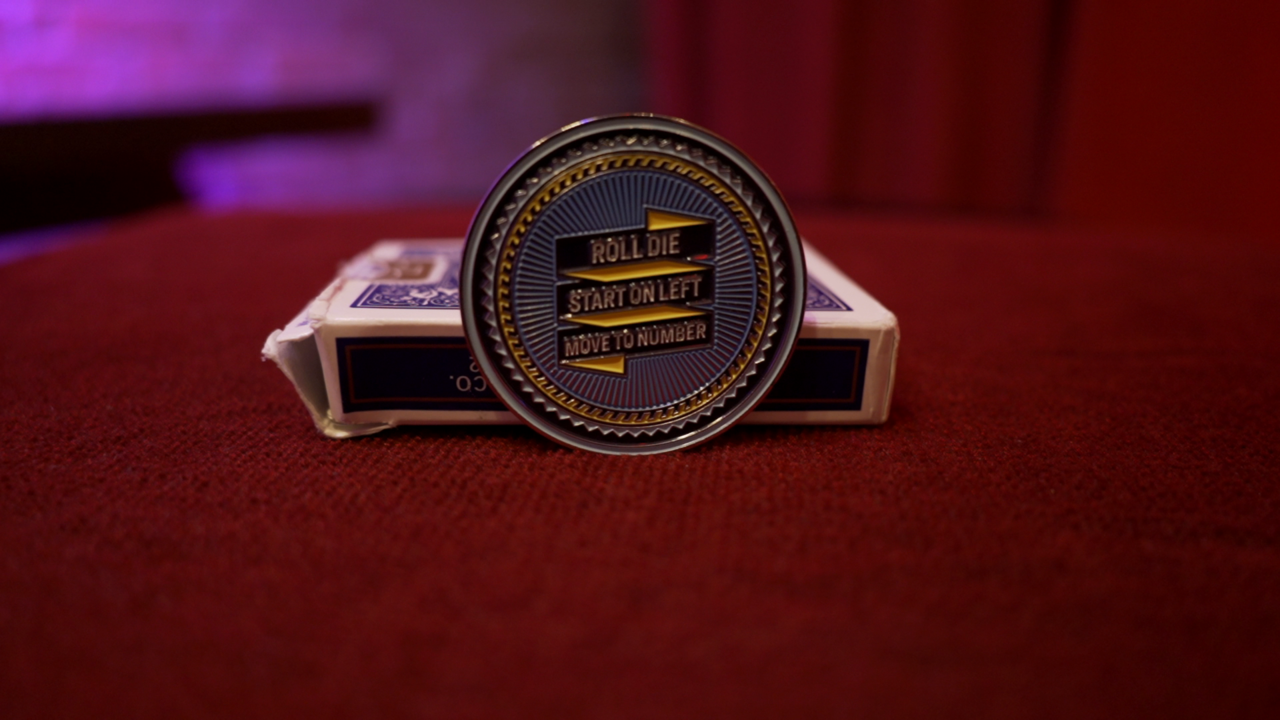
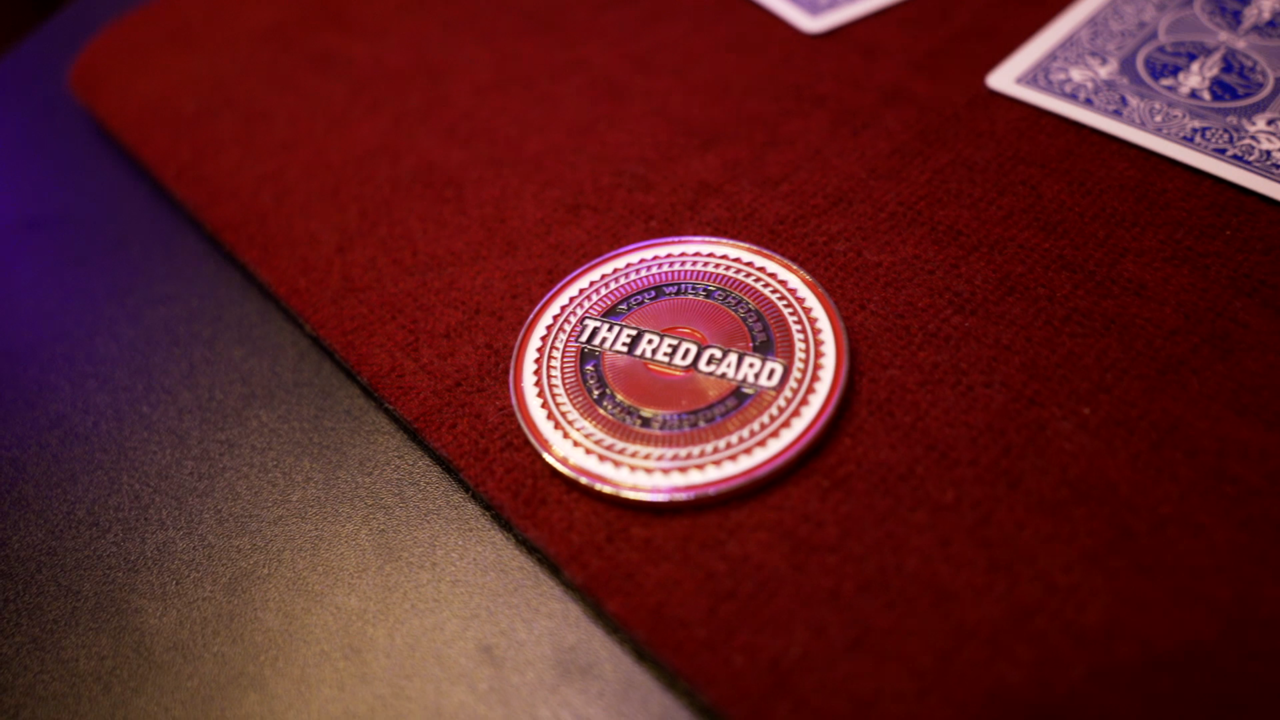



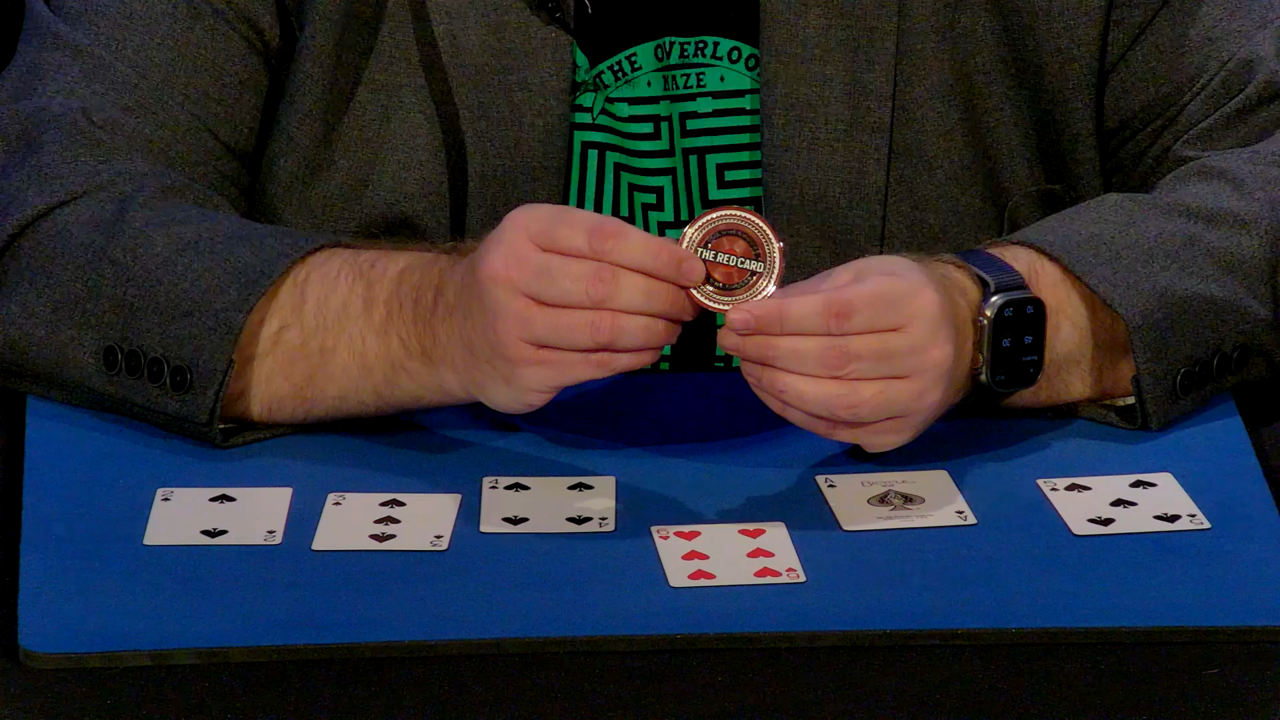
 +click to enlarge
"Challenge coin is about as strong and practical as it gets. I love it so much"- Jon Armstrong
"Based on Vernon’s “Dai’s Die’ (1963), R. Paul Wilson’s new variation adds a novel prop as part of the procedure which many will enjoy carrying with them for those moments where an interactive gaming - mind control experience would be well received by their audiences."- Brad Henderson
Six cards and a single coin form a prediction that can never fail and a bet you can never lose. This has lived in R. Paul Wilson’s pocket for years, and now it can live in yours. Your audience makes a single choice, and you can prove that you knew the exact choice they would make when you show them your prediction engraved on a piece of steel and immortalized in enamel. This is Challenge Coin by R. Paul Wilson.
Here’s what happens:
You lay out six playing cards in a face-up and face-down orientation. Mix them up until you are happy, then introduce your challenge coin. A coin used to make a simple bet that has rules engraved on it so that you cannot deviate from the procedure. You have your audience select a number from one to six and place the challenge coin on the selected card. This card is revealed to be the only red card, and then the challenge coin is turned over to reveal your prediction that they would land on the only red card.
Challenge coins have been used throughout history to bond people together, whether it's a ground of friends, family, or a military unit; the challenge coin represents a strong bond that nearly any audience can relate to. The procedure for the effect is permanently engraved on the beautifully manufactured challenge coin, so there is no doubt that everything is above board. There are no moving parts or complicated apparatuses; it is just an incredible routine that R. Paul Wilson teaches you in careful detail. You receive the coin, the cards, and everything you need to perform this powerful effect, ready to go right out of the box. Rise to the occasion with Challenge Coin by R. Paul Wilson.

 A Psychological Masterpiece
Report this review
I like this a lot!
Report this review
Challenge Coun
Report this review
Simple seems complex.
Report this review
Looks great!
Report this review
FANTASTIC TRICK!!!
Report this review
Great trick
Report this review
Really Cool.
Report this review
A Psychological Masterpiece
Report this review
I like this a lot!
Report this review
Challenge Coun
Report this review
Simple seems complex.
Report this review
Looks great!
Report this review
FANTASTIC TRICK!!!
Report this review
Great trick
Report this review
Really Cool.
Report this review
 Wonderful effect with a slighlty modified presentation
Report this review
Wonderful effect with a slighlty modified presentation
Report this review

 Doesn’t make sense or work if…….
Report this review
Doesn’t make sense or work if…….
Report this review
|
Get To Know Us
|
Shipping and Store Policies
|
Need Help?
|